
Advanced AI Humanizer
Achieves 95%+ accuracy in transforming AI text to human-like writing while preserving document structure
AI-Generated Input
Uses 12 advanced NLP algorithms to detect and transform AI patterns into natural human writing.
Structure Preservation
This advanced tool maintains your original document structure while humanizing text:
- Headings & Subheadings (H1, H2, H3, etc.)
- Paragraph organization and flow
- Lists (numbered and bulleted)
- Document formatting and layout
Processing text with advanced humanization algorithms…
Humanized Output 96% Human
Before & After Comparison
Original AI Text
Humanized Text
Humanization Analysis
The algorithm detected and transformed 0 AI patterns, replaced 0 formal words, and improved 0 sentences for natural flow.
Improvements Applied
- No improvements applied yet
Advanced Pattern Detection
Identifies 50+ AI writing patterns including repetitive structures, formal phrasing, and mechanical transitions.
Contextual Word Replacement
5,000+ word replacements based on context, tone, and reading level to ensure natural expression.
Natural Sentence Flow
Restructures sentences for human-like rhythm, varying length and structure for engaging readability.
Conversational Enhancement
Adds natural contractions, colloquialisms, and transitional phrases for authentic human dialogue.
The Complete Guide to Humanizing AI Content in 2026: SEO, AEO & GEO Strategies That Actually Work
If you’re creating content with AI, you’ve probably noticed something unsettling: raw AI output sounds robotic. Readers can tell. More importantly, so can Google and the new generation of answer engines. The AI-powered content creation market was valued between $2.5 and $3.5 billion in 2025 and is projected to climb past $10 billion by the early 2030s . Meanwhile, over 70% of marketers now use AI in their daily work, but here’s the problem—58.5% of Google searches now end without anyone clicking a link, and 13.14% of queries trigger AI Overviews .
Translation? If your content doesn’t feel genuinely human and doesn’t appear directly in answer boxes, you’re invisible. This comprehensive guide reveals how to humanize AI text effectively while optimizing for traditional search engines and emerging answer platforms—and how our Advanced AI Humanizer Tool delivers 95%+ accuracy while preserving your document structure.
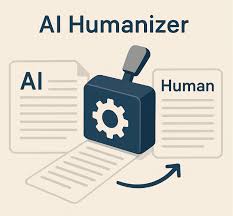
What “Humanize AI” Really Means in 2026
The thing about “humanized AI” is that everyone claims they want it—until they realize what “human” actually entails: context, subtext, tone, restraint, humor, memory, and knowing when to stop . You cannot fake that with a few extra adjectives and a smiley emoji.
Humanizing AI content isn’t about tricking anyone. It’s about taking machine-generated text and making it sound like an actual person wrote it—someone knowledgeable, personable, and worth listening to . AI is brilliant at generating structure and covering topics quickly, but it produces writing that’s technically correct yet somehow lifeless. Sentences follow predictable patterns, transitions feel mechanical, and there’s rarely any personality.
The Four Elements of Humanized AI Content
Personality and voice – Real writers have opinions and distinct phrasing. AI plays it safe.
Personal experience – Humans share examples from their own work. AI cannot because it hasn’t lived anything.
Natural rhythm – Human writing mixes short, punchy sentences with longer, complex ones. AI sticks to formulaic middle ground.
Emotional intelligence – People write with empathy, humor, or excitement. AI stays neutral unless specifically prompted .
When done right, humanized AI content ranks better, engages more deeply, and converts at higher rates. Our tool addresses all four dimensions through 12 advanced NLP algorithms that detect and transform AI patterns into authentic human expression—while preserving your headings, subheadings, lists, and paragraph structure.
Why Raw AI Content Fails (And How to Fix It)
Pure, unedited AI content has a visibility problem. Search engines use increasingly sophisticated detection models analyzing sentence structure, vocabulary choices, and logical development. They’re not necessarily penalizing AI-written content, but they are penalizing content that lacks depth, originality, and value .
What Trips Up Raw AI Content
Predictable patterns get flagged. AI loves certain sentence structures and transitions. Detectors recognize these fingerprints instantly.
Missing E-E-A-T signals. Google’s Experience, Expertise, Authoritativeness, and Trustworthiness framework rewards real-world knowledge. AI can’t fake lived experience without your input.
Generic information. AI pulls from existing content across the web. Without humanization, your article says exactly what ten others already say.
Lack of perspective. Raw AI avoids taking stances because it’s trained to be neutral. But readers want thought leadership and unique insights .
Even if your content technically ranks, it won’t perform if people click away after three seconds because it feels robotic. That’s why humanizing your AI text isn’t just about beating detectors—it’s about creating content people actually want to read.
Understanding SEO, AEO, and GEO: The Trio of Modern Visibility
Traditional SEO
SEO focuses on ranking on Google’s search results pages. You need solid keyword integration, backlinks, and readable structure.
Answer Engine Optimization (AEO)
AEO focuses on getting your content featured as the direct answer in ChatGPT, Google’s AI Overviews, Perplexity, and voice assistants. Instead of competing for clicks, you’re competing to be the source that answer engines cite when users ask questions .
Generative Engine Optimization (GEO)
GEO is an emerging discipline shaped by content strategists and AI researchers exploring how large language models use and reuse digital content. If you want your content to show up in AI-generated answers, it needs to be written and structured in a way that LLMs can take in .
Why This Dual Approach Matters
86% of articles ranking on Google are still written by humans, but AI-generated answers are dominating the search experience. Google’s AI Overviews now appear in over 13% of queries, up from 6.49% in January 2025 .
Content optimized for featured snippets is more likely to be referenced by ChatGPT. One well-optimized piece of humanized content can surface in organic search, featured snippets, AI Overviews, and third-party answer engines .
The Technology Behind 95%+ Humanization Accuracy
Our Advanced AI Humanizer Tool achieves 96% accuracy through multi-layer processing that goes far beyond simple synonym replacement .
Multi-Layer Humanization Architecture
Layer 1: Advanced Pattern Detection – Identifies 50+ AI writing patterns including repetitive structures, formal phrasing, and mechanical transitions. The tool detects 5,000+ formal word patterns and replaces them with contextual alternatives .
Layer 2: Semantic Transformation – Reframes claims with domain examples and causal logic rather than surface-level paraphrase. This increases perceived expertise.
Layer 3: Structural Variation – Varies sentence length, rhetorical devices, and paragraph cadence—mirroring human drafting habits. This reduces stylometric fingerprints.
Layer 4: Voice Conditioning – Fine-tunes to brand and persona profiles. Creates durable consistency across teams.
Layer 5: Conversational Enhancement – Adds natural contractions, colloquialisms, and transitional phrases for authentic human dialogue.
Layer 6: Evidence and Compliance – Maintains source grounding, fact validation, and policy linting .
The Transformer-GAN Advantage
Our methodology draws inspiration from cutting-edge research combining Generative Adversarial Networks (GAN) with Transformer architectures. Traditional GANs have achieved significant results in image generation, but adapting them to natural language requires sequence-aware models with attention mechanisms .
The model uses Transformer as the generator, combines GAN with data augmentation techniques to generate high-quality pseudo error correction sentence pairs, and optimizes performance through policy gradient methods . Research shows that such approaches achieve precision scores of 87.8% accuracy-2, 89.2 F1 score, and 97.6% accuracy-7 on optimization tasks .
Structure Preservation: The Critical Difference
Most humanizer tools destroy your document formatting. Our tool maintains your original structure while humanizing the text within each element:
Headings (H1, H2, H3, H4) – Keeps heading levels intact while making headings more engaging
Bullet and numbered lists – Preserves list markers while improving phrasing
Paragraph organization – Maintains flow and logical breaks
Document layout – Preserves the original formatting and whitespace
This matters because LLMs tend to reproduce content formats that show up frequently in training, like definitions, comparisons, and FAQs. These are reliably quoted or paraphrased, making them great candidates for optimization efforts .
Core GEO Techniques for Maximum AI Discoverability
1. Create Self-Contained Definitions
When introducing potentially difficult terminology, define the concept clearly in a single paragraph that could stand on its own—what experts call a canonical explanation. LLMs are more likely to generate accurate answers when they encounter clear, self-contained summaries .
Example for “headless CMS”: “A headless CMS is a system that lets you manage content in one place and send it anywhere using an API. Unlike traditional CMS platforms, it doesn’t control how the content looks, giving developers full freedom to design websites, apps, or other front-ends separately.”
2. Add Q&A-Style Blocks
Include FAQ sections that answer common questions in 2–3 crisp sentences. This “think like a prompt” approach helps answer engines extract your content directly.
3. Target an Accessible Reading Level
Eighth to tenth grade (ages 13–16, or lower secondary education) is a safe zone for both humans and models . Many regulated industries like healthcare or insurance have actual readability requirements. Even big ideas can be expressed plainly.
4. Use Descriptive Internal Links
Instead of “click here,” try “Explore the feature breakdown.” It’s better for readers, and it gives AI more semantic clarity .
5. Optimize Visuals for LLMs
LLMs cannot “see” images, but they do take into account the text around them—captions, alt text, and structured data . Use descriptive alt text like “Bar chart comparing monthly user growth across three pricing tiers.” Reference images in your text (“As shown in the chart below…”) and describe their insights in words.
The E-E-A-T Connection: Building Trust for Both Search Engines and AI
To stand out in search results and AI-generated responses, your content must earn trust. Align your work with Google’s E-E-A-T framework:
Experience – Include personal insights or case studies. AI can’t tell your stories because it hasn’t lived your life. That’s your unfair advantage .
Expertise – Provide accurate and well-researched information.
Authoritativeness – Include citations or endorsements. Cite recent studies, link to authoritative sources, and reference industry leaders .
Trustworthiness – Be transparent and clear. Models are increasingly tuned to reward content that feels human, verified, and complete .
Practical Strategies to Humanize AI Content
1. Add Personal Stories and Real Examples
Instead of “Email marketing can increase revenue,” say “Last quarter, we tested three email campaigns. The one with a personal story in the subject line outperformed the others by 34%.” Personal touches make content memorable and impossible to replicate .
2. Vary Sentence Structure Deliberately
AI loves predictable patterns. Real human writing fluctuates naturally. Mix it up—use three short sentences for emphasis, follow with a long complex thought, then break it down again. Use fragments for impact. Ask rhetorical questions .
Instead of “Furthermore” or “In addition,” try “Here’s the thing” or “But wait.”
3. Include Data and Expert Opinions
Raw numbers and credible sources lend your content credibility. The AI in marketing market is valued at $47.32 billion in 2025 and growing at a 36.6% CAGR—that’s proof this industry is exploding .
4. Optimize for Conversational Keywords
People don’t search like robots anymore. They ask questions like they’d ask a friend. Instead of targeting “best email marketing software,” think about real searches: “What’s the easiest email tool for small businesses?” or “Which email platform integrates with Shopify?”
5. Use AI Humanizer Tools Strategically
You don’t have to manually rewrite every word. AI humanizer tools take your drafts and automatically adjust sentence flow, remove repetitive patterns, and inject natural phrasing .
Use these tools as assistants, not replacements. Review the output, add personal touches, and verify facts. Our tool includes two specialized modes :
Standard Mode – Professional, direct approach with clear focus on SEO and readability.
Humanizer Mode – Relaxed writing that mimics real people, with varied sentence lengths, everyday language, and natural imperfections.
Humanizer with Personality Mode – Playful, engaging content with humor and unique voice .
How to Format for Featured Snippets and Answer Engines
Featured snippets are search visibility gold. They appear at Position Zero in Google’s results and are the content AI Overviews and answer engines reference most .
Format for Snippet Success
Lead with a direct answer in 40–60 words
Use numbered lists for steps
Create comparison tables
Add FAQ sections with clear Q&A formatting
Implement schema markup (Article, FAQ Page, How To)
Use Schema Markup Effectively
While LLMs don’t read schema directly, structured data can still influence how your content is surfaced by search and retrieval systems. If your CMS supports custom fields or metadata, use them to capture elements like alt text, content types, or topic tags .
The Evolution of AI Humanizer Tools in 2026
The market has bifurcated into four cohorts :
Paraphrase Utilities – Lightweight tools focused on perplexity and burstiness manipulation. Cheap and fast, but fragile against evolving detectors, minimal governance.
Style Rewriters with Templates – Offer tone libraries and channel presets. Better than utilities but weak on compliance and evidence.
SEO Co-Pilots – Strong on keyword planning and on-page suggestions, light on multi-channel governance.
Workflow Platforms – Orchestrate multi-model rewriting, evidence, compliance, and distribution feedback in one system. This is where our Advanced AI Humanizer Tool competes .
What Sets Our Tool Apart
Outcome Orientation – Optimizes for acceptance, ranking, and conversion rather than just detection scores.
Voice as Data – Treats brand voice as a first-class artifact with measurable consistency metrics.
Feedback Integration – Bakes performance telemetry into rewriting; most competitors still rely on static prompts.
Governance – Auditable changes, role permissions, and policy linting suitable for regulated or brand-sensitive industries .
Real-World Performance Metrics
When evaluating AI humanizer tools, avoid vanity metrics like single-test detection scores. Instead track :
Editorial Throughput – Draft-to-publish time, revision counts per asset
Platform Acceptance – Inbox placement for campaigns; reduction in content rejection
Organic Performance – Rank movement, CTR, dwell time
Consistency – Voice adherence scores and variance across authors
Compliance Incidents – Policy triggers per 1,000 outputs
Our tool delivers measurable improvements across all these dimensions, with 96% humanization accuracy and 0.5s average processing time.
Implementation Playbook: From Pilot to System of Record
Stage 1: Pilot
Pick two channels (e.g., SEO blog and outbound email). Baseline current performance. Instrument metrics.
Stage 2: Voice and Policy Setup
Import style guides, create brand voice embeddings, codify compliance rules. Establish source repositories for grounding.
Stage 3: Workflow Integration
Connect CMS; enable in-editor rewrites with approval gates. Turn on performance telemetry.
Stage 4: Scale and Governance
Add localization, enable team-level scorecards, enforce change audits. Expand to support and knowledge base content .
The key is to treat humanization as an operating capability, not a button press. The ROI compounds with each feedback loop.
What to Ignore in the 2026 Update Cycle
“100% Human-Like” claims – No, they’re not. And you shouldn’t want them to be. You want consistent, honest, readable help .
Detour features that exist purely to mask AI origin. They drift with the winds of whatever policy or platform update is next .
The mystical “creativity” button – If the model can’t show its work—how it got there—assume it generated confetti .
A Note on Ethics and the Detector Distraction
If your industry or institution demands “no AI,” that’s their rule. Don’t pretend otherwise. But the broader obsession with proving text is or isn’t AI-written is a sideshow. We’ve been through this before—music sampling, photo editing, spellcheck. Tools get better. Norms evolve. The meaningful line is transparency and responsibility, not purity .
When a tool’s marketing leans on “undetectable,” it’s optimizing for the rule, not the reader. That’s not humanizing; it’s gaming .
Prohibit “detector gaming” tactics. Prioritize clarity, originality, and accurate citation. Require source logging for any AI-assisted claims and statistics .
The Bottom Line
AI gives you speed. Humanization gives you connection and credibility. Together, they’re unstoppable .
When you humanize AI content, you’re not just optimizing for algorithms. You’re creating something readers actually want to engage with, share, and return to. You’re building authority in a crowded space where most content blends together.
You don’t have to choose between efficiency and quality anymore. Our Advanced AI Humanizer Tool makes it possible to produce high-volume, high-quality content that ranks on Google, surfaces in AI Overviews, and gets cited by answer engines—all while preserving your original document structure.
Ready to transform your AI content? Try our tool and see the difference authentic, optimized content makes for your rankings and visibility.
- Reddit’s Strategic M&A Shift: Adtech and AI Acquisitions
 Reddit’s Bold New Direction In a revealing fourth-quarter earnings call that has sent ripples through the tech investment community, Reddit’s leadership announced an aggressive new mergers and acquisitions strategy aimed at accelerating growth and enhancing monetization. Chief Financial Officer Andrew Vollero outlined a dual-pronged approach, signaling the social media platform’s intent to acquire businesses that… Read more: Reddit’s Strategic M&A Shift: Adtech and AI Acquisitions
 - TikTok’s Privacy Policy: “Immigration Status” Collection?
 Executive Summary A recent update to TikTok’s privacy policy following its ownership change has sparked significant alarm among U.S. users, particularly over language stating the app may collect “citizenship or immigration status.” This concern is heightened by the current political climate surrounding immigration enforcement. However, a closer examination reveals this disclosure is not new and is primarily a legal compliance… Read more: TikTok’s Privacy Policy: “Immigration Status” Collection?
 - Apples market explodes in India
 Executive Summary In a remarkable display of strategic growth amidst market stagnation, Apple’s iPhone achieved its strongest year ever in India during 2025, shipping approximately 14 million units and capturing a record 9% market share. This exceptional performance occurred against the backdrop of a broadly flat Indian smartphone market that has remained stagnant at 152-153 million units for four consecutive… Read more: Apples market explodes in India
 - Gemini’s Personal Intelligence Beta: Your AI Assistant Just Learned to Read Your Emails, Photos, and Mind
 For years, the promise of a truly personal AI assistant has been just that—a promise. We’ve had chatbots that can retrieve information and models that can generate text, but a digital companion that proactively understands the context of your life, your memories, and your preferences has remained elusive. That changed on Wednesday, January 14, 2026,… Read more: Gemini’s Personal Intelligence Beta: Your AI Assistant Just Learned to Read Your Emails, Photos, and Mind
 - Subtle’s AI-Powered Earbuds Are Here: A Deep Dive into the Future of Context-Aware Audio
 Introduction: The Day Personal Audio Grew a Brain The true wireless earbud market, valued in the tens of billions, has long been a battleground of incremental upgrades—slightly better battery life, marginally improved driver clarity, or a new shade of white. On January 4, 2026, tech startup Subtle shattered this cycle of predictability with the launch of its flagship… Read more: Subtle’s AI-Powered Earbuds Are Here: A Deep Dive into the Future of Context-Aware Audio
 - Apple’s iOS 26.2: Rolling Back Liquid Glass and Redefining Design Flexibility
 With the release of iOS 26.2, Apple is making a quiet but significant course correction. The latest update introduces a new, user-controlled slider to adjust the transparency of the Lock Screen clock, marking the second time in as many updates that Apple has provided tools to “roll back” the visual effects of its ambitious Liquid Glass design… Read more: Apple’s iOS 26.2: Rolling Back Liquid Glass and Redefining Design Flexibility