
When Stress Becomes a Data Problem
Antonio Forenza experienced a familiar modern dilemma: after successfully using an Apple Watch to track and lose 40 pounds, he confronted a less tangible health challenge—chronic workplace stress. The telecom executive realized that while he could measure steps, heart rate, and calories with precision, there was no equivalent device to quantify and manage the mental strain affecting millions worldwide. This gap in consumer health technology led to a revelation: “I wanted to lose 40 pounds of stress, and realized there’s no wearable for that today”.
From this insight emerged Awear, a startup now generating buzz as “a Fitbit for your brain.” This discreet behind-the-ear device represents more than just another wellness gadget—it signals a fundamental shift in how we monitor and manage mental health. By applying century-old electroencephalogram (EEG) technology to everyday stress detection, Awear bridges neuroscience with consumer accessibility, offering real-time brainwave monitoring and AI-powered coaching to intercept chronic stress before it escalates into serious health consequences.
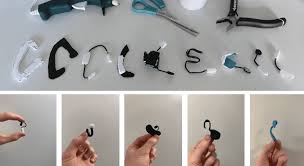
This innovation arrives at a critical moment. The World Health Organization estimates that anxiety and depression cost the global economy approximately $1 trillion annually in lost productivity, while Gallup consistently finds that about 44% of employees experience daily stress. As healthcare increasingly embraces predictive and personalized approaches, devices like Awear represent the vanguard of a movement toward data-driven mental wellness that could transform how we understand and optimize our cognitive and emotional lives.
How Awear Works: Neuroscience Meets Everyday Life
The Science Behind the Sensor
At its core, Awear leverages electroencephalography (EEG), a technology hospitals have used for decades to diagnose conditions like epilepsy and sleep disorders. What makes Awear innovative is its adaptation of this clinical-grade technology into a consumer-friendly, continuous monitoring device that fits discreetly behind the ear.
The device specifically tracks beta brain waves—high-frequency electrical activity associated with cognitive load, sustained attention, and the sympathetic nervous system’s “fight-or-flight” response. While elevated beta activity serves important functions during focused work or emergency situations, persistent elevation indicates chronic stress activation that can lead to exhaustion, insomnia, and broader mental distress. Awear’s innovation lies in its ability to detect these patterns in real-time during daily activities, not just in clinical settings.
From Raw Data to Actionable Insights
The behind-the-ear sensor represents a strategic design choice based on emerging “ear-EEG” research. Studies, including work from the University of Oldenburg on cEEGrid technology, have validated this anatomical position for reliably detecting alpha and beta rhythms during everyday activities. This placement offers several advantages: it’s discreet enough to wear continuously, avoids the social awkwardness of forehead-mounted sensors, and provides good signal quality without requiring conductive gel.
The collected brainwave data transmits to a companion app, where artificial intelligence algorithms analyze patterns in context—considering time of day, user routines, sleep history, and other factors. Rather than presenting raw EEG readings, the system translates this data into personalized insights and offers evidence-based interventions such as paced breathing exercises, wind-down protocols, or task reordering suggestions. This closed-loop system—detect, analyze, intervene—aims to help users develop what Awear’s founder calls “emotional resilience” by providing timely feedback when stress patterns emerge.
The Market Context: A New Frontier in Wearable Health
The Evolution Beyond Step Counting
Awear enters a rapidly maturing wearable market that IDC estimates exceeded 500 million unit shipments in 2023. This market is undergoing a significant transformation: devices are evolving from basic activity trackers to sophisticated health monitors measuring everything from sleep quality to cardiovascular function. Within this landscape, mental load and restorative capacity represent the next frontier.
Most consumer wearables currently estimate stress through indirect proxies like heart rate variability (HRV), skin temperature, and respiration patterns. While valuable, these metrics have limitations. HRV, for instance, can be affected by fitness levels, caffeine consumption, and medications. Awear’s direct neural measurement potentially offers greater specificity for detecting psychological stress independent of these confounding factors.
Competitive Landscape and Strategic Positioning
Awear isn’t the first company to explore brain-sensing wearables, but its approach differs strategically from predecessors. Companies like Muse created meditation headbands for focused sessions, while Emotiv and Neurosity developed EEG devices for developers and focus tracking. These typically require wearing devices on the forehead or crown during specific activities rather than continuous daily monitoring.
By contrast, Awear’s behind-the-ear design enables continuous, passive monitoring more akin to a hearing aid than a meditation tool. This positions it closer to wellness wearables like Oura Ring (which it explicitly references as a model) rather than specialized neurofeedback devices. The company’s early focus on individual consumers rather than clinical applications further distinguishes its approach, though strategic partnerships like the one with Stanford University’s psychiatry department suggest future clinical potential.
Table: Comparison of Mental Wellness Wearable Approaches
| Device Type | Measurement Method | Use Case | Wearability |
|---|---|---|---|
| Awear | Direct EEG (beta waves) | Continuous stress monitoring & coaching | Behind-ear, all-day |
| Smartwatches | HRV, temperature, respiration | Periodic stress estimation | Wrist, all-day |
| Meditation Headbands | Multi-channel EEG | Focused meditation sessions | Forehead, session-based |
| Smart Rings | HRV, temperature, movement | Sleep & recovery tracking | Finger, all-day |
The Business Behind the Technology
Funding and Market Strategy
Awear’s development follows a now-familiar startup trajectory in the wearable space. The company has already closed a pre-seed funding round led by Hustle Fund, Niremia Collective, Techstars, and The Pitch Fund. Looking ahead, Awear plans to raise a $5 million seed round in early 2026.
The go-to-market strategy explicitly mirrors successful wearable launches. Following its seed round, the company intends to launch a Kickstarter campaign—a path that proved effective for products like Peloton and Oura. As founder Antonio Forenza notes, “It gives you a lot of visibility, and it’s a good way to acquire customers”. This approach balances community building with managing production risk through pre-orders.
Currently, Awear is available through an early-access program priced at $195, which includes a complimentary lifetime app subscription. This pricing positions it as a premium wellness tool, comparable to higher-end smart rings rather than basic fitness trackers. The early adopter community already includes many startup founders—a “notoriously stressed-out group” that provides ideal initial test users.
Clinical Validation and Future Applications
While marketed primarily as a wellness product, Awear is simultaneously pursuing clinical validation. The partnership with Stanford University’s psychiatry department represents a strategic move toward establishing scientific credibility. Researchers are testing whether the device can detect confusion and disorientation in elderly patients after surgery—an application that could eventually support clinical decision-making.
This dual-track approach—consumer wellness and clinical research—reflects a broader trend in digital health. Many innovations begin in the consumer space before seeking regulatory clearance for medical applications. Any move toward clinical claims would require navigating FDA pathways such as de novo or 510(k) clearance with peer-reviewed evidence demonstrating health benefits.
Challenges and Considerations
Technical Hurdles and User Experience
Despite its promising technology, Awear faces practical implementation challenges common to EEG devices. Signal quality can be affected by movement, skin contact, and environmental interference. The company addresses these concerns through its behind-the-ear design, claiming this position is “quieter and undetectable under hair or glasses”. Long-term user adherence and comfort will be critical factors determining whether people incorporate the device into daily life beyond initial novelty.
Another challenge involves data interpretation and actionability. Translating complex brainwave patterns into understandable, helpful insights requires sophisticated algorithms and user interface design. The risk of information overload or misinterpretation is significant in any biometric tracking system. Awear’s emphasis on AI-powered coaching rather than raw data presentation aims to mitigate this by providing clear, contextual recommendations.
Privacy and Ethical Dimensions
Brainwave data represents perhaps the most intimate category of personal biometric information. As such, data privacy and security are paramount concerns. The company acknowledges that “clear policies around encryption, on-device processing and data minimization will come to be table stakes for consumer trust”. Unlike step counts or heart rate, brain activity patterns could reveal sensitive information about mental states, attention, or even potentially private thoughts.
The regulatory landscape for neurotechnology is also evolving. While Awear currently operates in the wellness space, increasing capabilities in brain monitoring may eventually prompt new regulatory frameworks. Companies in this space must navigate complex questions about informed consent, data ownership, and appropriate use of neural information—issues that become increasingly important as the technology advances.
The Broader Health Tech Context
AI’s Expanding Role in Healthcare
Awear emerges within a broader healthcare transformation where artificial intelligence is moving beyond diagnostics into personalized interventions and operational efficiency. Healthcare organizations are increasingly adopting AI-powered solutions to address clinical burnout and workforce shortages through tools like ambient listening for documentation and smart clinical assistants.
The mental health sector specifically is experiencing an AI-driven evolution. As noted in industry analysis, “mental health continues to command more attention within HealthTech,” with both virtual therapy and AI-enabled cognitive behavioral tools scaling rapidly. These developments align with a growing emphasis on preventive, personalized approaches to mental wellness rather than reactive treatment.
Remote Monitoring and Consumer-Driven Health
Awear also fits within the expanding Remote Patient Monitoring (RPM) landscape, which has grown beyond basic vital sign tracking to include complex health metrics through advanced sensors and wearables. The integration of AI with these monitoring capabilities enables predictive alerts and personalized adjustments, potentially reducing hospital readmissions and emergency visits.
This trend toward consumer-driven healthcare platforms reflects a societal shift where patients increasingly seek control over their health data and care decisions. Platforms prioritizing transparency, education, and empowerment are gaining momentum, creating opportunities for patient-centric product development. In this context, Awear represents an extension of the quantified-self movement into cognitive and emotional domains.
Implications for the Future of Mental Wellness
From Reactive to Proactive Stress Management
The fundamental promise of technologies like Awear lies in shifting mental healthcare from reactive treatment to proactive management. By providing real-time feedback about stress patterns, such devices could help users develop greater awareness of their physiological responses and implement interventions before stress becomes chronic. As founder Antonio Forenza explains, “Our brain is phenomenal at self-adjusting and makes us believe we are not stressed”.
This approach aligns with emerging understanding of chronic stress as a physiological process with identifiable biomarkers. Rather than relying solely on subjective self-assessment, objective measurement could enable more timely and targeted interventions. For high-stress professionals—the initial target market—this could mean catching unsustainable work patterns before they lead to burnout, insomnia, or more serious health consequences.
Integration with Broader Health Ecosystems
The long-term potential of brain-sensing wearables may lie in their integration with broader digital health ecosystems. As healthcare moves toward more connected, data-rich environments, devices like Awear could contribute valuable cognitive and emotional data to comprehensive health profiles. This integration could enable more holistic approaches to health that recognize the interconnectedness of mental and physical wellbeing.
Such integration would require advances in data interoperability—connecting electronic health records, wearable devices, and patient-generated health information into unified digital health ecosystems. The rise of “digital health operating systems” seeks to streamline patient journeys across providers and payers, potentially creating opportunities for mental wellness data to inform broader care decisions.
Conclusion: Beyond the Hype to Sustainable Innovation
Awear represents an intriguing intersection of neuroscience, wearable technology, and AI applied to one of modern life’s most pervasive challenges. Its success will depend not only on technological execution but on demonstrating genuine value in helping people manage stress more effectively. As with many wellness technologies, the crucial question is whether it provides insights that meaningfully change behavior and improve health outcomes.
The company’s next milestones—clinical validation from the Stanford collaboration, peer-reviewed publications on real-world accuracy, and longitudinal outcome studies—will provide important evidence about its potential. Business developments, including enterprise pilots with employers and insurers, will indicate whether the value proposition extends beyond individual consumers to organizational health initiatives.
Perhaps most importantly, technologies like Awear prompt broader reflection about our relationship with technology-mediated self-knowledge. As we develop ever more sophisticated tools to quantify our bodies and minds, we must consider what we hope to gain from this knowledge and how it serves our wellbeing. In the quest to manage chronic stress, technological solutions represent only part of the answer—but they may provide valuable tools in developing greater awareness, resilience, and balance in an increasingly demanding world.
The coming years will reveal whether brain-sensing wearables like Awear become mainstream tools for mental wellness or remain niche products. What’s certain is that the convergence of neuroscience, AI, and consumer technology will continue producing innovative approaches to age-old human challenges—bringing us closer to understanding and optimizing that most complex of all systems: the human brain.
- Reddit’s Strategic M&A Shift: Adtech and AI Acquisitions
 Reddit’s Bold New Direction In a revealing fourth-quarter earnings call that has sent ripples through the tech investment community, Reddit’s leadership announced an aggressive new mergers and acquisitions strategy aimed at accelerating growth and enhancing monetization. Chief Financial Officer Andrew Vollero outlined a dual-pronged approach, signaling the social media platform’s intent to acquire businesses that… Read more: Reddit’s Strategic M&A Shift: Adtech and AI Acquisitions
 - TikTok’s Privacy Policy: “Immigration Status” Collection?
 Executive Summary A recent update to TikTok’s privacy policy following its ownership change has sparked significant alarm among U.S. users, particularly over language stating the app may collect “citizenship or immigration status.” This concern is heightened by the current political climate surrounding immigration enforcement. However, a closer examination reveals this disclosure is not new and is primarily a legal compliance… Read more: TikTok’s Privacy Policy: “Immigration Status” Collection?
 - Apples market explodes in India
 Executive Summary In a remarkable display of strategic growth amidst market stagnation, Apple’s iPhone achieved its strongest year ever in India during 2025, shipping approximately 14 million units and capturing a record 9% market share. This exceptional performance occurred against the backdrop of a broadly flat Indian smartphone market that has remained stagnant at 152-153 million units for four consecutive… Read more: Apples market explodes in India
 - Gemini’s Personal Intelligence Beta: Your AI Assistant Just Learned to Read Your Emails, Photos, and Mind
 For years, the promise of a truly personal AI assistant has been just that—a promise. We’ve had chatbots that can retrieve information and models that can generate text, but a digital companion that proactively understands the context of your life, your memories, and your preferences has remained elusive. That changed on Wednesday, January 14, 2026,… Read more: Gemini’s Personal Intelligence Beta: Your AI Assistant Just Learned to Read Your Emails, Photos, and Mind
 - Subtle’s AI-Powered Earbuds Are Here: A Deep Dive into the Future of Context-Aware Audio
 Introduction: The Day Personal Audio Grew a Brain The true wireless earbud market, valued in the tens of billions, has long been a battleground of incremental upgrades—slightly better battery life, marginally improved driver clarity, or a new shade of white. On January 4, 2026, tech startup Subtle shattered this cycle of predictability with the launch of its flagship… Read more: Subtle’s AI-Powered Earbuds Are Here: A Deep Dive into the Future of Context-Aware Audio
Pingback: Beyond Neuralink: The "Strange" Max Hodak Is Building