
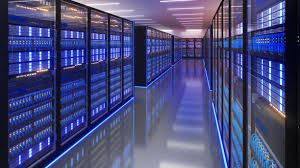
The explosive growth of artificial intelligence is fueling an unprecedented construction boom—one that is rapidly reshaping the American landscape. Across the nation, vast, power-hungry data centers are rising to meet the insatiable computational demands of AI models. While this boom represents a massive wave of private investment and technological progress, it is simultaneously creating a critical bottleneck for the nation’s traditional infrastructure. Roads, bridges, water systems, and public transit projects are finding themselves in direct competition with these “hyperscale” builds for the same finite resources: skilled labor, critical materials, electrical capacity, and even water. The AI revolution, it seems, is on a collision course with America’s foundational needs.
The Scale of the Surge: Billions in Investment, Billions in Debt
To understand the magnitude of the clash, one only needs to look at the numbers. Private spending on data center construction has been on an annualized pace exceeding $41 billion. This staggering figure is roughly equivalent to the total amount state and local governments are spending on transportation construction nationwide. In essence, the private sector’s push to build AI infrastructure now matches public investment in the physical infrastructure that moves people and goods.
Meanwhile, governments are preparing to fund a historic pipeline of public works projects. Municipal bond strategists project around $600 billion in new debt issuance next year, most of which is earmarked for infrastructure improvements. The funds are available, but the physical and human resources needed to turn that capital into concrete and steel are being stretched to their limits. This disconnect sets the stage for a nationwide squeeze.
The AI data center boom is a testament to technological ambition, but it also serves as a stress test for the nation’s capacity to build. The challenge ahead is not to halt progress, but to orchestrate it. By strategically expanding capacity and enforcing smarter, more sustainable development practices, it is possible to harness the power of AI without sacrificing the roads, bridges, water systems, and electrical grids that form the backbone of everyday American life. The next few years will determine whether we can build the future without neglecting the foundation.
The Great Resource Squeeze: Labor, Materials, and Power
The construction industry was already facing a protracted labor shortage before the AI boom accelerated. Today, the competition has intensified. Data centers are “plum jobs” that offer richer wages, expedited schedules, and faster payments, making them highly attractive to contractors and skilled tradespeople. As Autodesk CEO Andrew Anagnost told Bloomberg, there is “absolutely no doubt” that data center construction “sucks resources from other projects”. Public-sector owners report losing bids to private data center projects, forcing rebids and delays on essential civic work.
The strain extends beyond labor to critical materials and equipment. The specialized gear required for data centers—like switchgear, backup generators, and large power transformers—has lead times stretching from 40 to over 100 weeks. This backlog directly impacts public projects like highway interchanges, rail electrification, and water treatment plants that rely on the same electrical components.
Perhaps the most dramatic point of contention is electrical power. AI data centers are energy vampires on a colossal scale. A single, modern hyperscale facility can use as much power as 100,000 homes or more. To put this in perspective, Meta’s Hyperion data center in Louisiana is expected to draw more than twice the power of the entire city of New Orleans once completed. Utilities, particularly in hotspot regions like Northern Virginia, Central Ohio, and Phoenix, are now fielding gigawatt-scale inquiries from data center developers. This surge is overloading grids and creating interconnection queues that stretch for years, slowing not only new data centers but also the renewable energy and transmission projects needed to power them—projects that are also crucial for public transit electrification and community resilience.
The economic calculus for local governments is rapidly evolving as the full costs of hosting data centers come into focus. While county budgets swell from property taxes on billion-dollar campuses, officials are discovering that the promised “fiscal windfall” often requires substantial reinvestment to mitigate strain on public systems. School districts in data-center-rich areas report that while revenue increases, so does the cost of upgrading electrical systems in schools and installing advanced HVAC systems to handle increased ambient heat from nearby server farms. Furthermore, the low permanent employment of these facilities does little to alleviate housing demand, but their massive power draw can lead to upward pressure on electricity rates for all residents and small businesses. This creates a paradox where a municipality may have a larger tax base but face higher costs of living and doing business, potentially offsetting the very economic benefits used to justify the projects.
The Thirst of the Machines: Water and Land Impacts
The resource drain is not limited to the construction phase. Operational data centers place immense, ongoing demands on local water supplies for cooling. Even a mid-sized data center can consume as much water as a small town, while larger facilities require up to 5 million gallons per day—equivalent to a city of 50,000 people. A study cited by the Lincoln Institute of Land Policy projects that data centers in Texas alone will use 49 billion gallons of water in 2025, a figure that could skyrocket to 399 billion gallons by 2030. This is water that, through evaporative cooling, is often permanently removed from local watersheds, exacerbating scarcity in already stressed regions.
The land footprint is equally significant. These facilities can cover hundreds of acres with impermeable surfaces, displacing farmland, natural habitats, and housing, while requiring new transmission corridors and associated infrastructure. The extractive nature of these developments has led some policy experts to liken them to 21st-century coal mines.
Technological innovation offers a potential pathway to reduce this resource conflict, particularly concerning energy and water. Leading tech companies are investing heavily in next-generation cooling systems, such as direct-to-chip and immersion cooling, which can reduce a data center’s water usage to nearly zero. Microsoft, for instance, has committed to being “water positive” by 2030, meaning it will replenish more water than it consumes globally. On the energy front, many operators are pursuing Power Purchase Agreements (PPAs) for new solar and wind farms, directly funding additive green energy. However, these solutions are not yet universal, and the pace of their adoption is outstripped by the breakneck speed of data center construction. Public policy, such as zoning ordinances that mandate air-cooling or the use of treated wastewater, will be crucial to making advanced sustainability practices the industry standard rather than a corporate PR initiative.
Regional Flashpoints and Economic Trade-Offs
The conflict between AI infrastructure and public works is playing out vividly in specific regions:
- Northern Virginia (“Data Center Alley”): Home to the world’s densest concentration of data centers, the region faces immense pressure on its power grid and water resources. While data centers contribute nearly $900 million in local tax revenue in Loudoun County—almost matching the county’s entire operating budget—this has created a dangerous over-reliance on a single, resource-intensive industry.
- Texas: Lured by cheap land and energy, the state is a magnet for data center proposals. However, the projected water usage poses a severe challenge to long-term water security.
- Georgia: A Meta data center in Newton County uses 500,000 gallons of water per day, accounting for 10% of the entire county’s consumption. Proposed new centers could use up to 6 million gallons daily, more than doubling current county-wide use.
The economic trade-off is stark. While data centers generate substantial property tax revenue, they create relatively few permanent jobs post-construction. A former AOL campus that once employed 5,300 people has been replaced by three large data centers that will employ only 100 to 150 people on the same land. Communities must weigh short-term fiscal gains against long-term resource sustainability and diversified employment.
The national security dimension adds another layer of complexity to the infrastructure debate. The U.S. government views maintaining a lead in AI as critical to economic and military competitiveness, creating implicit pressure to facilitate data center growth. This federal priority can sometimes clash with state and local authority over land use and resource management. The recent invocation of the Defense Production Act to accelerate the manufacturing of critical electrical transformers highlights how the data center boom is now a matter of federal concern. This tension raises fundamental questions about sovereignty and burden-sharing: should a small county bear the water stress for a facility deemed vital to national interests, and if so, what is the corresponding obligation for federal support to upgrade that county’s water infrastructure?
The AI bonanza shows no sign of abating, meaning the competition for resources will only intensify. Purposeful policy and planning are required to prevent public infrastructure from permanently getting the “short end of the stick”. Several strategies could help manage the squeeze:
- Expand Human Capacity: Accelerating workforce training and apprenticeship pipelines for skilled trades, alongside extending targeted immigration pathways, is essential to enlarging the labor pool.
- Streamline Public Procurement: Modernizing and standardizing public bidding processes to shrink cycle times can make civic projects more competitive with fast-tracked private builds.
- Coordinate Grid and Resource Planning: Faster permitting for transmission lines, bulk procurement of essential electrical gear, and integrated planning between utilities, data center developers, and municipal agencies can alleviate equipment bottlenecks.
- Mandate Sustainable Practices: Policies that encourage or require advanced cooling technologies (like immersion cooling), heat reuse, and the use of non-potable water can significantly reduce the local environmental footprint of data centers.
- Holistic Community Impact Assessments: Local governments must move beyond tax incentive lures to conduct rigorous, upfront assessments of a data center’s full impact on water security, grid reliability, and land use before approving projects.
Ultimately, the AI data center boom is forcing a long-overdue reckoning with America’s systemic underinvestment in foundational infrastructure. The grid, in particular, was not designed for this moment. The scramble to connect gigawatts of new demand is exposing the brittle, fragmented nature of a transmission system that has seen little major expansion for decades. In this light, the data center surge could act as a catalyst. The immense private capital and political will it commands could be harnessed to “future-proof” the grid, accelerating the build-out of high-voltage transmission lines and modular transformer manufacturing in ways that benefit all electricity consumers, from homeowners to factories. The challenge is ensuring this modernization is planned holistically for public benefit, not just as a series of private wire connections to server farms.
The path forward requires a new social contract between technology companies, governments at all levels, and the communities that host this essential infrastructure. This contract must move beyond simplistic tax incentives to include enforceable commitments on sustainability, investment in shared public goods, and transparent planning. Data center operators, as the primary drivers of this demand shock, must evolve from mere consumers of public resources into active partners in resilience. This could take the form of co-investment in regional water recycling plants, funding for workforce training pipelines, or financing “grid boost” transmission projects. The alternative—a zero-sum game where private computational infrastructure overwhelms public physical infrastructure—serves no one in the long run. It would leave communities with decaying roads and uncertain water supplies alongside gleaming temples of AI, a dichotomy that is neither sustainable nor equitable. The success of the AI era will be measured not just by the models it creates, but by the enduring strength of the society it is built upon.
- Reddit’s Strategic M&A Shift: Adtech and AI Acquisitions
 Reddit’s Bold New Direction In a revealing fourth-quarter earnings call that has sent ripples through the tech investment community, Reddit’s leadership announced an aggressive new mergers and acquisitions strategy aimed at accelerating growth and enhancing monetization. Chief Financial Officer Andrew Vollero outlined a dual-pronged approach, signaling the social media platform’s intent to acquire businesses that… Read more: Reddit’s Strategic M&A Shift: Adtech and AI Acquisitions
 - TikTok’s Privacy Policy: “Immigration Status” Collection?
 Executive Summary A recent update to TikTok’s privacy policy following its ownership change has sparked significant alarm among U.S. users, particularly over language stating the app may collect “citizenship or immigration status.” This concern is heightened by the current political climate surrounding immigration enforcement. However, a closer examination reveals this disclosure is not new and is primarily a legal compliance… Read more: TikTok’s Privacy Policy: “Immigration Status” Collection?
 - Apples market explodes in India
 Executive Summary In a remarkable display of strategic growth amidst market stagnation, Apple’s iPhone achieved its strongest year ever in India during 2025, shipping approximately 14 million units and capturing a record 9% market share. This exceptional performance occurred against the backdrop of a broadly flat Indian smartphone market that has remained stagnant at 152-153 million units for four consecutive… Read more: Apples market explodes in India
 - Gemini’s Personal Intelligence Beta: Your AI Assistant Just Learned to Read Your Emails, Photos, and Mind
 For years, the promise of a truly personal AI assistant has been just that—a promise. We’ve had chatbots that can retrieve information and models that can generate text, but a digital companion that proactively understands the context of your life, your memories, and your preferences has remained elusive. That changed on Wednesday, January 14, 2026,… Read more: Gemini’s Personal Intelligence Beta: Your AI Assistant Just Learned to Read Your Emails, Photos, and Mind
 - Subtle’s AI-Powered Earbuds Are Here: A Deep Dive into the Future of Context-Aware Audio
 Introduction: The Day Personal Audio Grew a Brain The true wireless earbud market, valued in the tens of billions, has long been a battleground of incremental upgrades—slightly better battery life, marginally improved driver clarity, or a new shade of white. On January 4, 2026, tech startup Subtle shattered this cycle of predictability with the launch of its flagship… Read more: Subtle’s AI-Powered Earbuds Are Here: A Deep Dive into the Future of Context-Aware Audio